
Equipment Safety Training
Farm work is demanding, and so are the machines that power it. Every year, preventable accidents on tractors and implements cause injuries to employees or even family members. The good news: most of those incidents can be avoided with consistent equipment safety training, clear procedures, and well-maintained machines.
In San Juan County and across the Four Corners, farmers rely on local support for both equipment and knowledge. The Watson Tractor Service Department in Farmington offers seasonal inspections, training, and guidance that help keep operations safe. For small farms, maneuverable compact tractors are easy to train new operators on while providing the horsepower needed for chores.
What Effective Farm Equipment Safety Training Covers
Good training goes beyond a quick orientation. It provides a framework for safe operation in every setting. The essentials include:
- Startup and shutdown checklists
- Safe mounting and dismounting
- Roll-Over Protective Structure (ROPS) and seatbelt use
- Power Take-Off (PTO) and driveline guarding
- Safe hitching and three-point connections
- Loader operation
- Road transport protocols
- Bystander and child safety
Training works best when it pairs short classroom-style talks with in-field demonstrations on the tractors and implements your crew uses. Annual refreshers, supported by toolbox talks during busy seasons, reinforce good habits.
OSHA and New Mexico Requirements for Farms
Agriculture is partially exempt from Occupational Safety and Health Administration (OSHA) oversight, but many standards still apply. New Mexico farms should keep:
- Records of safety training attendance and topics
- Hazard communication materials
- Documentation of guarding on power transmission components
- Incident and inspection logs
These records not only meet compliance expectations but also help with insurance claims and liability protection.
Compact Tractors: Training Priorities for Small Farms
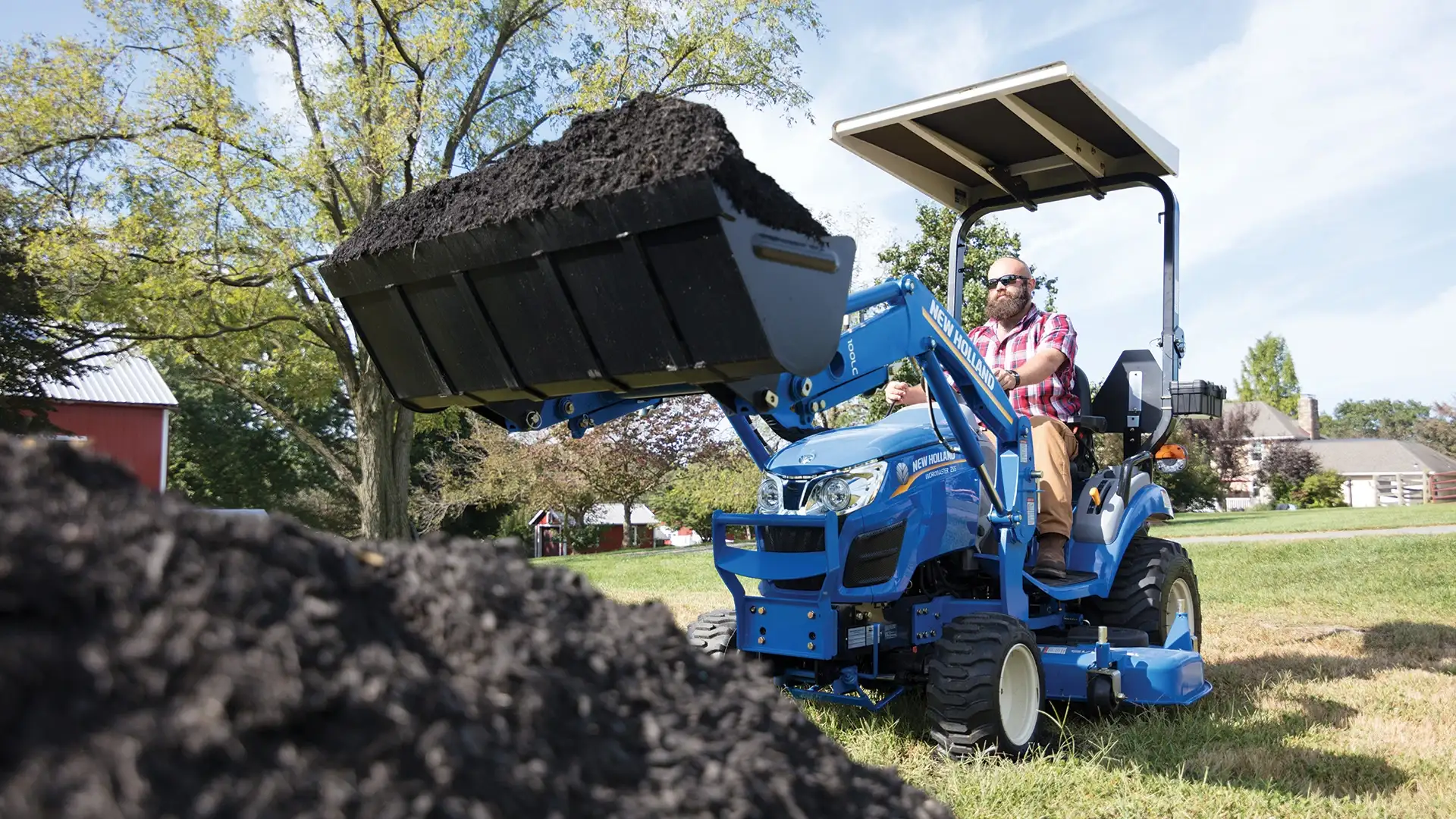
For many small farms in New Mexico, compact and sub-compact tractors are the right fit. New Holland models like the WORKMASTER™ 25/35/40 and WORKMASTER™ 25S deliver the horsepower needed for mowing, cultivating, and loader work while remaining manageable for new operators. The Boomer™ 35–55 series adds more capability for small-acreage operations with heavier tasks.
Key training points for compact tractors include:
- Stability on uneven terrain, terraces, and ditches
- Proper ballast and tire selection
- Safe loader use with quick-attach implements
- PTO horsepower matching for mowers and tillers
- Delivery checklists for new operators: controls orientation, parking, implement hookup, and transport practice
Maintenance as Safety: Service and Inspections
Maintenance is more than a reliability issue — it is a safety requirement. Worn brakes, poor steering, cracked shields, or failing hydraulics can turn routine work into an accident. At minimum, review:
- Brakes and steering systems
- ROPS integrity
- PTO and driveline shields
- Lighting and slow-moving vehicle emblems
- Hydraulic lines and couplers
- Tire tread and inflation
Our Service Department provides professional inspections, diagnostics, warranty repairs, and even pickup and delivery. Trained technicians can spot problems early and provide operator guidance during service appointments.
Parts That Protect
Safety depends on the right components being in place. Shields, guards, belts, hoses, lighting, and emblems wear out and should be replaced before they fail. Our Watson Tractor Parts Department in Farmington stocks Original Equipment Manufacturer (OEM) and aftermarket safety parts and can coordinate with service for installation.
Personal Protective Equipment (PPE) and Safe Work Practices
Even the best-trained operators need protective gear. A farm-specific PPE plan should include:
- Eye and face protection
- Hearing protection for engine and PTO work
- Gloves for chemical handling
- Steel-toe boots for heavy tasks
- Respiratory protection in dusty fields or during chemical applications
Work practices matter as much as equipment: enforce essential habits such as no riders on tractors, keys out when unattended, and full shutdown before unclogging implements.
Emergency Procedures and Drills
Every farm should have written, posted emergency procedures. These should cover:
- First-aid kits on each tractor and in major buildings
- Fire extinguishers mounted and checked
- Emergency shutoff steps
- GPS/address signage for emergency responders
- Call lists for workers and family members
Semiannual drills ensure that workers know what to do if an accident happens. For chemical work, keep Safety Data Sheets (SDS) with sprayers, and practice response protocols for PTO entanglement or fire.
Insurance and Risk Management
Insurance requirements vary, but nearly all providers expect proof of training and documentation of service. Take these steps to strengthen your risk management:
- Confirm coverage for both employees and family members who work the farm
- Log training dates, topics, and sign-offs
- Keep receipts and records of all maintenance and service
- Schedule a pre-season safety review with your dealer or consultant
Role-Based Training: Owners, Family, and Hired Hands
Not everyone should be trained for the same tasks.
- Owners should review full safety protocols and keep records.
- Family members, especially youth, should be restricted from PTO-driven and loader tasks.
- Hired workers should receive structured training for the tasks they will perform, with new employee mentorship for the first 40 hours.
Providing bilingual handouts or checklists helps make training accessible to all workers.
Glossary of Farm Safety Terms
- Occupational Safety and Health Administration (OSHA): The federal agency that sets and enforces workplace safety rules. Some agricultural operations are partially exempt, but general safety duties and certain standards still apply.
- Roll-Over Protective Structure (ROPS): A reinforced frame or cab designed to protect the operator in a rollover. ROPS must be used with a seatbelt to be effective.
- Power Take-Off (PTO): The rotating shaft on a tractor that transfers power to implements like mowers and tillers. PTOs require guards and strict shutdown procedures to prevent entanglement.
- Personal Protective Equipment (PPE): Gear that reduces exposure to hazards — eye and face protection, hearing protection, gloves, steel-toe boots, and respirators.
- Original Equipment Manufacturer (OEM): Parts made by the equipment’s manufacturer to the original specifications. Often preferred for safety-critical components and warranty alignment.
- Safety Data Sheet (SDS): A standardized document that explains hazards, handling, and first-aid measures for chemicals. Keep SDS sheets with sprayers and in a central, accessible location.
FAQs
How often should farm equipment be inspected?
At least before and midway through the season, plus any time there’s an incident or unusual vibration. Seasonal inspection programs are available through the Service Department.
What’s the safest first tractor for a small New Mexico farm?
A compact tractor with ROPS, matched loader capacity, and local service support. Models like the New Holland WORKMASTER™ 25S or WORKMASTER™ 25/35/40 are strong choices.
Can Watson Tractor help train new operators?
Yes. Operator walk-throughs and safety briefings are available when you schedule service or equipment delivery.
Keep Safety Part of the Routine
Farm safety comes down to three habits: train consistently, maintain equipment properly, and prepare for emergencies. Those steps protect workers, families, and the operation itself.
To schedule a seasonal safety inspection or request operator training, contact our Service Department at Watson Tractor in Farmington. For replacement shields, guards, or other safety-critical parts, visit the Parts Department. If you’re unsure where to start, reach out through our Contact Us page and our team will point you in the right direction.
Farm work is hard enough. With structured training and dependable support from your local San Juan County dealer, it doesn’t have to be dangerous.