
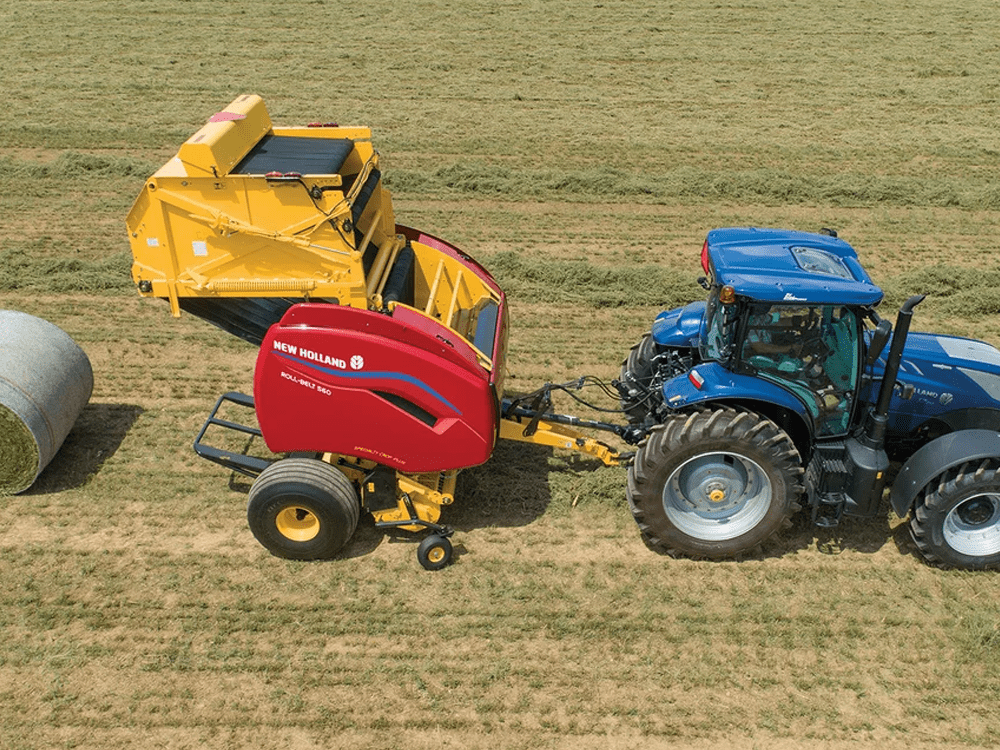
Every potato implement you pull, power, or lift puts specific demands on the tractor behind it. A potato planter needs steady ground speed and consistent depth control. A potato harvester needs hydraulic capacity and stability under load. A potato hiller needs responsive lift and clean row tracking. When the tractor can’t keep up with the implement, the crop pays for it.
At Watson Tractor, we work with growers across the Four Corners who run potato equipment on irrigated ground with tight planting and harvest windows. The question we hear most often isn’t “what planter should I buy?” It’s “can my tractor actually run it the way it needs to run?”
This guide walks through the tractor specifications that matter most for potato farming equipment, with specific attention to the New Holland models we carry and support in Farmington.
What Potato Implements Demand from a Tractor
Potato equipment spans planting, cultivation, and harvest, and each stage loads the tractor differently. But four specifications come up in nearly every implement conversation:
Horsepower. Potato planters, hillers, and harvesters all have minimum HP requirements that account for draft load, ground speed, and PTO demand. Undersized horsepower forces slower field speeds, which compresses already-tight work windows in New Mexico’s irrigated production systems.
Hydraulic flow and pressure. Many potato implements rely on hydraulic circuits for depth adjustment, down-pressure, row unit lift, and conveyor or chain drive. A tractor with limited hydraulic capacity will starve the implement at the moments it matters most.
PTO specifications. PTO-driven potato equipment requires matched shaft speed (typically 540 or 1000 RPM) and enough power delivery to run the implement without bogging or surging. Soft-start PTO engagement also protects both the tractor and the implement from shock loads during startup.
Three-point hitch lift capacity. Mounted potato hillers, bed shapers, and cultivation tools need adequate lift capacity and responsive draft control. When lift falls short, depth varies across the field, and the operator spends the season compensating for what the tractor can’t hold.
Ballast and traction also matter, especially on irrigated ground where soil conditions change within the same field. Four-wheel drive with a locking front differential helps maintain consistent pull when conditions get soft.
Tractor Requirements by Potato Operation Stage
Potato Planter Operation
A potato planter controls seed spacing, depth, and placement accuracy. Those three factors drive stand uniformity, and stand uniformity drives yield. When the tractor behind the planter can’t hold a steady speed or consistent depth, emergence gets uneven and the problems compound through the season.
What the tractor needs to deliver during planting:
- Enough horsepower to maintain target speed under draft load, typically 80-110+ HP depending on row count and soil conditions
- Hydraulic capacity to manage planter down-pressure and depth adjustments on the move
- Smooth, predictable ground speed control, which is where transmission choice becomes important
- Adequate three-point lift to raise and lower the planter cleanly at headlands
For Four Corners growers running two- or four-row planters, the New Holland T5.110 (106 engine HP, 91 PTO HP) and T5.120 (117 engine HP, 100 PTO HP) are strong matches. Both offer up to 22.2 GPM hydraulic flow with the MegaFlow option, 540/1000 RPM PTO, and rear three-point lift capacity of 5,620 lbs standard (7,351 lbs with the optional assist ram). The T5 Series also offers four transmission options, including the Auto Command CVT, which gives operators precise speed control without shifting during the pass.
Smaller operations running single- or two-row planters on lighter ground may find the T5.90 (86 HP, 73 PTO HP) or T5.100 (99 HP, 82 PTO HP) sufficient, particularly when paired with the Dual Command 24×24 Hi-Lo transmission.
Potato Hiller and Cultivator Operation
Once the crop is up, potato hillers, ridgers, and row cultivators maintain soil coverage over developing tubers, manage weeds, and protect row shape for harvest. These implements are typically three-point-mounted and rely on the tractor’s hydraulic draft control to maintain a consistent working depth across varying soil conditions.
What matters here:
- Responsive draft control that adjusts automatically as soil resistance changes
- Enough lift capacity to carry mounted cultivators and hillers without bottoming out the system
- Row crop clearance and maneuverability for clean passes without damaging the crop
- Consistent forward speed to maintain uniform ridge shape
The T5 Series delivers well for cultivation work thanks to its compact turning radius and available SuperSteer front axle (on Dual Command models), which provides up to 76 degrees of turning angle for tighter headland turns. The Electronic Draft Control (EDC) system lets operators fine-tune drop rate, height limiting, sensitivity, and slip for uniform cultivation depth.
For growers running lighter cultivation setups on smaller acreage, the WORKMASTER 55-75 Series offers 4WD, a 12×12 power shuttle, and enough hydraulic capacity for single-toolbar hilling and cultivation passes. The compact 3-cylinder engine keeps the hood profile low for better forward visibility during row work.
Potato Harvester and Digger Operation
Harvest is where tractor limitations show up in the crop. A potato harvester or potato digger puts sustained load on the tractor across horsepower, hydraulics, PTO, and stability simultaneously. If any one of those falls short, field speed drops, bruising increases, or the machine plugs.
Tractor requirements during harvest:
- Sustained horsepower under combined draft and PTO load, often the highest HP demand of the entire potato season
- Hydraulic flow to run harvester conveyors, chain drives, and depth control circuits without pressure loss
- PTO power delivery that stays consistent under variable load as digging conditions change
- Weight and ballast for stability, especially on irrigated ground where soil moisture varies across the field
- Soft-start PTO engagement to protect harvester components during startup
The T5.120 is typically our starting recommendation for growers running pull-type potato harvesters. Its 100 PTO HP, 22.2 GPM hydraulic flow (MegaFlow), and 7,351-lb optional lift capacity give the implement room to work without starving the system. The 600-hour engine oil change interval also means fewer service interruptions during harvest, when downtime costs the most.
For operations using simpler single-row potato diggers, the T5.100 or T5.110 can provide enough power and hydraulic capacity while keeping the equipment investment proportional to acreage.
Why Transmission Choice Matters for Potato Work
Transmission selection doesn’t always get the attention it deserves in potato equipment conversations, but it directly affects planting consistency, cultivation quality, and harvest efficiency.
The T5 Series offers four transmission options:
- Dual Command 24×24 Hi-Lo: Mechanical shifting with Hi-Lo splits in every gear. Good for operators who prefer direct control and lower acquisition cost.
- Electro Command 16×16: Semi-powershift with clutchless changes under load. Useful for mixed operations that move between potato work and other tasks.
- Dynamic Command 24×24: Eight-step semi-powershift that allows fine speed adjustments without stopping. Well-suited to planting and cultivation where small speed changes affect implement performance.
- Auto Command CVT: Continuously variable transmission that allows infinitely adjustable speed within the operating range. This is the strongest option for potato planting, where holding precise ground speed across changing field conditions is critical to seed-spacing accuracy.
For growers who are evaluating tractor options across their full operation, our tractor buying guide covers ROI considerations for matching tractors to implement needs beyond potato work.
Keeping Potato Equipment Running During Critical Windows
Planting and harvest windows in New Mexico don’t wait for parts orders or service scheduling. When potato equipment goes down during a critical window, the tractor that powers it needs support that matches the urgency.
Watson Tractor’s parts department stocks New Holland OEM components, PTO driveline parts, hydraulic fittings, and wear items that keep tractors and implements connected. Our service department handles seasonal inspections, hydraulic diagnostics, and PTO system checks that help prevent mid-season failures.
A pre-season service check that covers hydraulic flow, PTO engagement, three-point hitch response, and tire condition can catch problems before they become harvest-day emergencies.
Financing Tractor Upgrades for Potato Operations
For growers adding potato acreage or upgrading from an underpowered tractor, equipment financing can keep the upgrade from draining working capital during the season.
The math on tractor upgrades for potato work often comes down to time and quality: a tractor that maintains proper field speed through planting covers more acres per day, and a tractor with adequate hydraulic capacity during harvest reduces bruising and improves pack-out quality. Both translate directly to revenue.
Watson Tractor’s financing options are structured for seasonal agricultural cash flow, so payments can align with when crops generate income rather than when equipment arrives.
Talk to Us About Your Potato Equipment Setup
If your potato equipment is pushing your tractor beyond its limits, we can help you evaluate the match and recommend a setup that protects both yield and equipment. Request a quote on the New Holland T5 Series or WORKMASTER models, and we’ll work through the horsepower, hydraulic, PTO, and lift requirements for your specific implements and acreage.
Watson Tractor has served Farmington and the Four Corners region since 1952. We know the ground, we know the equipment, and we’ll help you keep both working.
FAQs
How much horsepower does a potato planter need?
Most commercial potato planters require 80 to 120+ engine horsepower, depending on row count, planting depth, and soil conditions. A two-row planter on lighter irrigated ground may operate well with 85-100 HP, while a four-row unit on heavier soil will need 110 HP or more to maintain target speed without bogging. The New Holland T5 Series covers this range from 86 HP (T5.90) to 117 HP (T5.120), with PTO output from 73 to 100 HP.
What hydraulic capacity do potato harvesters require?
Potato harvesters typically need sustained hydraulic flow to run conveyors, separation chains, and depth control circuits simultaneously. The specific GPM requirement varies by harvester model, but most pull-type harvesters perform best with 15-22+ GPM of dedicated implement flow. The T5 Series offers a base flow of 16.9 GPM with an optional MegaFlow upgrade to 22.2 GPM, plus a separate steering and services pump to prevent implement circuits from competing with steering response.
What PTO speed do potato implements use?
Most potato implements, including planters, harvesters, and PTO-driven hillers, use either 540 or 1000 RPM PTO speed. The T5 Series offers base 540/1000 RPM with an optional 540E economy speed that allows PTO-driven implements to run at rated speed while the engine operates at lower RPM, reducing fuel consumption and noise during extended field operations. Soft-start PTO engagement is standard across the T5 line, which helps protect implement drivelines from shock loads.
Can a WORKMASTER tractor handle potato equipment?
The WORKMASTER 55-75 Series can handle lighter potato operations, including single-row planting, basic hilling, and single-row digger work on smaller acreage. The 75 HP model with 4WD and a 12×12 power shuttle provides enough power for these tasks in typical irrigated soil conditions. For commercial-scale potato operations with multi-row planters and pull-type harvesters, the T5 Series is a better fit due to its higher hydraulic capacity, advanced draft control, and stronger PTO output.
How should I evaluate a tractor upgrade for potato work?
Start with the implements you already own or plan to buy. Check the manufacturer’s recommended tractor specifications for horsepower, PTO speed, hydraulic flow, and minimum three-point lift capacity. Then compare those numbers against your current tractor. If your tractor meets minimums but doesn’t have margin, you’ll feel it during long days or in difficult field conditions. Watson Tractor can help you run through these comparisons for your specific equipment and connect you with financing options if an upgrade makes sense for your operation.