
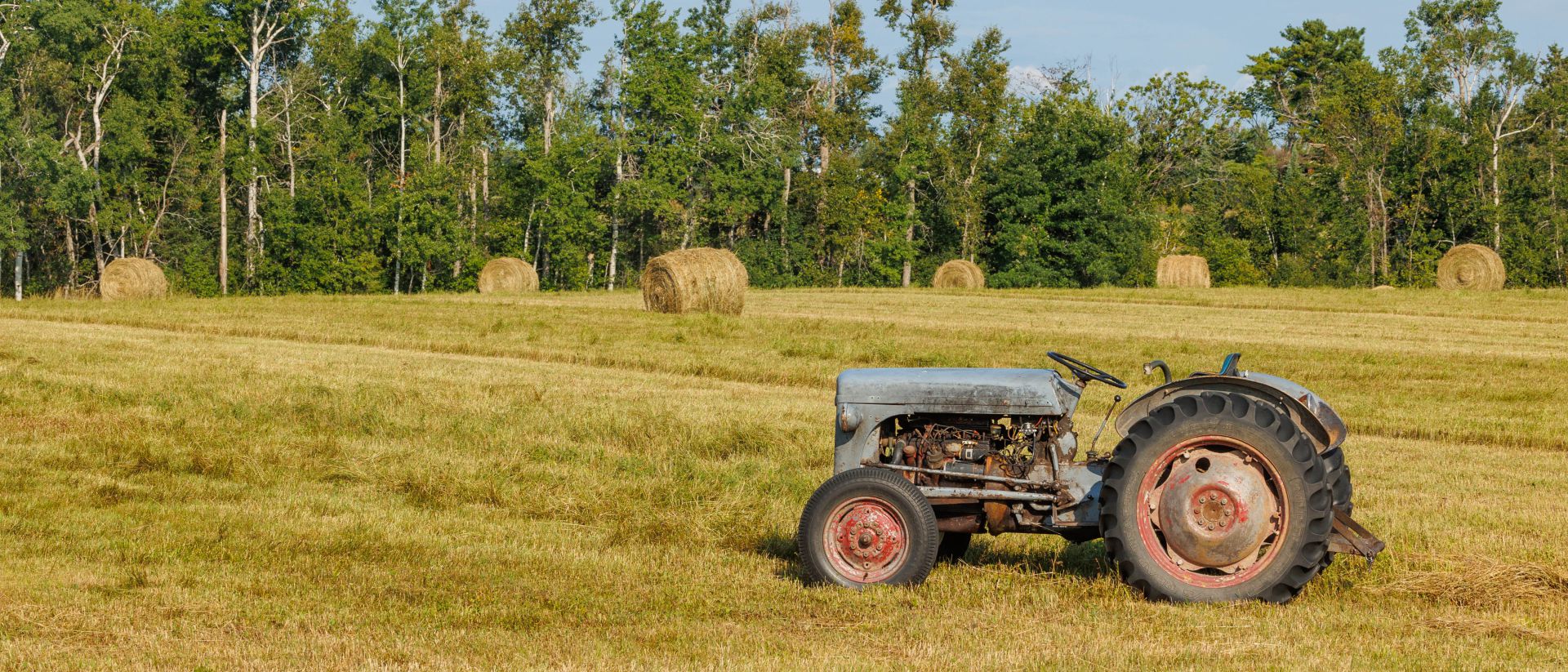
Alfalfa Hay Equipment Guide: Maximizing Your Four Corners Hay Operation
A productive alfalfa hay operation in the Four Corners depends on matching your tractor, mower, rake, and baler to your acreage and harvest schedule. Leaf retention drives feed value, and delays between cutting and baling are where most quality is lost. Watson Tractor works with San Juan County growers to build equipment lineups that keep pace with tight irrigation-driven harvest windows.
Alfalfa demands more precision than most hay crops. Timing, moisture, and handling all affect leaf retention, which carries much of the crop’s feed value. According to New Mexico State University Extension research, yield and leaf losses during mowing and conditioning alone can reach 2-3%, and losses from raking and baling are moisture-dependent and can climb much higher. Small mistakes during cutting, drying, or baling can reduce quality quickly.
In the Four Corners, those challenges are harder to manage. Dry conditions, irrigation schedules, and tight harvest windows leave little room for delays. Equipment has to work in sequence, with tractors, cutting equipment, rakes, and balers all matched to the pace of the field.
At Watson Tractor, we work with operations across San Juan County to build equipment setups that perform in these conditions and help preserve hay quality from first cutting through storage.
Why Alfalfa Works in the Four Corners
Alfalfa remains one of the most reliable forage crops in the Four Corners. It produces multiple cuttings per season under irrigation, typically three to four in this region, and delivers consistent protein levels that are hard to match with other forages. Across New Mexico, alfalfa hay is the state’s number one cash crop, with annual sales exceeding $200 million, and irrigated operations in San Juan County contribute to that production year after year.
That reliability makes alfalfa a strong fit for growers who can stay on top of their harvest schedule and keep equipment matched to the pace of each cutting.
What Equipment Do You Need for an Alfalfa Hay Operation?
Alfalfa production runs in a sequence from cutting through baling, and each step depends on the equipment you have in the field. What you need comes down to your acreage, yield goals, and how you plan to handle the crop.
Most operations rely on:
- A tractor sized for your implements
- Cutting equipment such as a disc mower or mower-conditioner
- Tedders when conditions call for faster drydown
- Rakes to form consistent windrows
- Balers that match your feeding or sales model
The goal is to keep things moving, so the crop is not sitting in the field longer than necessary.
The Basic Hay Workflow: Cutting Through Baling
- Cut alfalfa at the right stage to balance yield and quality
- Let the crop dry down evenly in the field
- Rake windrows for clean, consistent pickup
- Bale at the correct moisture to avoid leaf loss or spoilage
- Move and store bales in a way that protects feed value
Each step affects hay quality. Once the crop is cut, delays or uneven handling start to work against you.
What Are the Best Tractors for Alfalfa Farming in the Four Corners?
In short: The best tractor for alfalfa in the Four Corners is one that matches your implements and field conditions. Most operations need between 40 and 120 PTO horsepower depending on acreage, mower width, and baler size.
Power take-off (PTO) horsepower needs to support your mowers and balers. Hydraulics handle loader work and implement control. And the tractor itself has to hold up through long days in the field without slowing you down with constant maintenance.
At Watson Tractor, we see most operations fall into three practical categories based on acreage and equipment needs.
Matching Tractor Size to Operation Size
- Smaller acreage operations often rely on compact tractors in the 25-40 horsepower range
- Mid-size hay operations typically call for utility tractors in the 50-75 horsepower range
- Higher-volume hay operations rely on larger tractors that can handle wider cutting equipment and larger balers
Tractor Features That Matter Most for Alfalfa Work
Across all three categories, a few features make the biggest difference in the field:
- PTO horsepower to keep mowers and balers running at a steady pace
- Hydraulic capacity for loader work and implement control
- Stability on uneven or irrigated ground
- Operator comfort during long summer hours
- Simple, reliable maintenance during peak season
Features like shuttle shifting and engine speed management also make a difference when you are working through multiple passes in a day.
If you are comparing options, our breakdown in Complete Guide to New Holland Tractors for Four Corners Farming Operations helps connect specific models to real use cases.
Which Cutting Equipment Helps Protect Hay Quality?
In short: Mower-conditioners are the standard choice for alfalfa because they cut and condition in one pass, speeding up drydown and reducing leaf loss. Disc mowers without conditioning can work but often require additional field time.
Hay quality starts at the first pass. A clean cut and proper conditioning can make the difference between high-value feed and lost nutrients.
Disc mowers and mower-conditioners are standard for alfalfa. They cut quickly and allow for more consistent drydown, especially in thicker stands.
New Holland Discbine equipment, available at Watson Tractor, is commonly used in the region for handling heavy alfalfa while maintaining an even cut and consistent conditioning.
Why Cutting Speed and Conditioning Matter in Alfalfa
Faster cutting reduces the time the crop sits exposed to weather. Conditioning helps stems dry at the same rate as leaves, which protects nutrient value. Roller-style conditioners tend to work better for alfalfa than flail conditioners, because they crimp the stem without shredding leaf tissue.
If drying is uneven, leaf loss increases during raking and baling. That is where feed quality starts to drop.
Do You Need Tedders and Rakes for Better Drydown and Pickup?
Not every field requires a tedder, but in the Four Corners, it often becomes a useful tool during heavy first cuttings or uneven drying conditions.
Tedders spread the crop to help it dry more evenly. Rakes then gather the crop into uniform windrows for baling.
When a Tedder Makes Sense
- Thick windrows that trap moisture
- Uneven drying across the field
- Short harvest windows due to weather
- Early cuttings with heavier tonnage
Why Rake Setup Affects Bale Quality
Rakes shape how the crop feeds into the baler, and that affects everything that comes after. Timing matters here too. University of Missouri Extension research notes that once field moisture drops below about 40%, dry matter losses from raking and baling can range from 10 to 25%, with most of that loss coming from leaves. Raking while the crop still holds adequate moisture helps reduce leaf shatter.
A well-formed windrow leads to:
- Cleaner pickup
- More consistent bale density
- Less dirt contamination
- Better feed quality
What Type of Baler Fits Your Operation?
In short: Round balers are built for volume and efficiency on larger operations, while small square balers offer more flexibility for manual handling and horse hay markets. The right choice depends on how your hay is fed, stored, and sold.
The right baler depends on how your hay is handled, stored, and fed.
Round balers are built for volume and efficiency. Small square balers offer more flexibility, especially for smaller operations that handle bales manually or sell into horse markets.
Watson Tractor carries both New Holland round balers and Hayliner small square balers, each suited to different operation sizes and feeding needs.
Round Bales vs. Small Square Bales
Round bales work well for large-scale feeding and storage. They reduce labor and allow you to move more hay in less time.
Small square bales are easier to handle manually and remain popular in horse markets and smaller livestock operations.
Moisture, Timing, and Bale Quality
Even the best baler cannot fix poor timing.
Bale too wet, and you risk mold. Bale too dry, and you lose leaves, which hold most of the nutrients. University of Minnesota Extension recommends baling hay at 15 to 20% moisture for safe storage. Below 15%, leaf loss increases significantly, especially in alfalfa. Above 20%, heating and mold become a concern.
Good equipment helps, but timing and moisture control still determine the final quality.
Why Local Service Matters During Hay Season
In short: Equipment downtime during a cutting window can cost both yield and quality. Local access to parts and service in San Juan County helps growers stay on schedule when conditions are tight.
Even well-maintained equipment can fail at the wrong time. During cutting and baling, delays can cost both yield and quality.
In the Four Corners, timing windows are tight, and waiting on parts or repairs can put a field behind quickly. Having access to local New Holland tractor service in San Juan County means problems can be handled before they turn into lost time in the field.
At Watson Tractor, our service department works with growers throughout the season to keep equipment running when it counts. You can learn more about what we offer on our Service Department page.
What to Service Before First Cutting
- Engine oil, hydraulic fluid, and filters
- Belts, hoses, and cutting components
- PTO systems and hydraulics
- Tires and brakes
- Baler pickup and wear points
A preseason check helps catch small issues before they turn into downtime during harvest.
Why San Juan County Growers Need Fast Parts Access
Watson Tractor stocks parts for New Holland hay equipment and tractors on site, which means common wear items for mowers, balers, and PTO systems are available without waiting on shipments. Our team supports growers across Farmington, Aztec, Kirtland, and surrounding areas, and can coordinate parts and service during active cutting windows. For more on how that works, see Parts Availability and Emergency Service: Keeping Your Farm Running.
How Can You Build a Smarter Alfalfa Equipment Lineup?
The most efficient operations plan equipment as a system, not a series of individual purchases.
Instead of adding pieces one at a time, build your lineup around how your fields are worked from cutting through baling. Key factors to consider include:
- Total acreage and field layout
- Irrigation setup
- Cutting schedule
- Bale type and storage
- Feeding goals or market demand
Financing can also play a role. Matching payments to seasonal cash flow can make it easier to put the right equipment in place without overextending. At Watson Tractor, we offer financing options designed to fit how agricultural operations actually earn and spend throughout the year.
Questions to Ask Before You Buy
- How many acres will you cut each season?
- How tight is your harvest window?
- What bale type fits your operation?
- Does your tractor match your implements?
- Do you have reliable local service support?
Clear answers lead to better equipment decisions.
Keep the Operation Running, Field to Bale
Alfalfa production in the Four Corners comes down to staying on pace from cutting through baling. The right tractor, hay tools, and service support all play a role in keeping that pace.
When equipment matches your operation, you spend less time adjusting and more time working through the field while conditions are right.
At Watson Tractor, we work with growers across San Juan County to match equipment to their land, schedule, and long-term plans. If you are planning upgrades or preparing for the next cutting season, our team is here to help you get set up before the work begins.
Frequently Asked Questions
What Size Tractor Do I Need for Alfalfa Hay Equipment?
Most alfalfa operations need between 40 and 120 horsepower depending on acreage and equipment size. Smaller fields can run compact tractors, while larger operations require utility tractors with higher PTO output.
The key is matching PTO horsepower to your mower and baler. For example, many disc mowers require at least 50 horsepower, while larger balers may require 70 horsepower or more. Hydraulic capacity and weight also matter for stability and performance.
Is a Disc Mower or Mower-Conditioner Better for Alfalfa?
A mower-conditioner is usually the better choice for alfalfa because it cuts and conditions the crop in one pass. This speeds up drying and helps preserve leaf quality.
Disc mowers without conditioning can still work, but they often require additional passes or longer drying time. In regions like the Four Corners, where timing is crucial, faster drydown can protect forage quality.
Do I Need a Tedder for Alfalfa Hay?
A tedder is not always required, but it can improve drying in certain conditions. It is most useful during heavy cuttings or when windrows are too dense to dry evenly.
By spreading the crop, a tedder helps reduce moisture faster and can shorten the time between cutting and baling. This can be valuable when weather windows are tight.
What Is the Best Baler for Livestock Hay?
The best baler depends on how the hay will be used. Round balers are efficient for large-scale feeding and storage. Small square balers are better for operations that need manageable bale sizes or sell to horse owners.
Each option has trade-offs in labor, storage, and transport. Matching the baler to your feeding system is more important than choosing a single “best” option.
How Often Should Hay Equipment Be Serviced During the Season?
Hay equipment should be checked before each cutting and inspected regularly throughout the season. Key areas include lubrication points, belts, knives, and pickup components.
Routine checks can prevent breakdowns during peak harvest periods. Many growers also schedule preseason service to catch issues early and reduce downtime when fields are ready.
Where Can I Get New Holland Tractor Service in San Juan County?
Watson Tractor provides New Holland tractor service in San Juan County, including maintenance, diagnostics, and repair support. Our team works with growers across the Four Corners region to keep equipment running during critical seasons.
Having local service support helps reduce downtime and keeps your operation on schedule when conditions are right.